How to Stop Deer Eating Your Plants (UK 2025 Guide)
How to Stop Deer Eating Your Garden Plants — Safely and Naturally
Deer damage is becoming increasingly common across UK gardens, especially in rural and semi-rural areas. If you wake up to stripped buds, missing roses or damaged shrubs, you’re not alone — and you can fix it without harming wildlife.
Deer rely heavily on scent and taste. When they detect an unfamiliar, “unsafe” smell, or unusual taste they avoid the area immediately.
DeerEx uses a natural, biodegradable repellent that deer instinctively avoid:
Safe for pets
Safe for children
Safe for wildlife & pollinators
Weather-resistant
Long-lasting (4–6 weeks)
This creates an invisible barrier around plants, preventing deer from feeding.
How to Use DeerEx for Maximum Protection
Top search terms: how to use deer repellent, best deer deterrent method
Dilute one 50g sachet in warm water
Top up to 9 litres
Spray evenly on:
Roses
Shrubs
Borders
Young trees
New plantings
Reapply every 4–6 weeks or after heavy rain
Consistency is key — this “conditions” deer to avoid your garden permanently.
Additional Deer-Proofing Tips
Protect new shoots first — deer love fresh growth
Apply repellent early in spring
Treat borders before damage occurs
Remove food waste that attracts wildlife
Combine repellent + good garden hygiene
Conclusion
You can protect your plants without harming wildlife. Natural scent repellents like DeerEx offer safe, reliable and long-lasting control.
Explore the best eco-friendly deer repellent in the UK at Here
How it Works
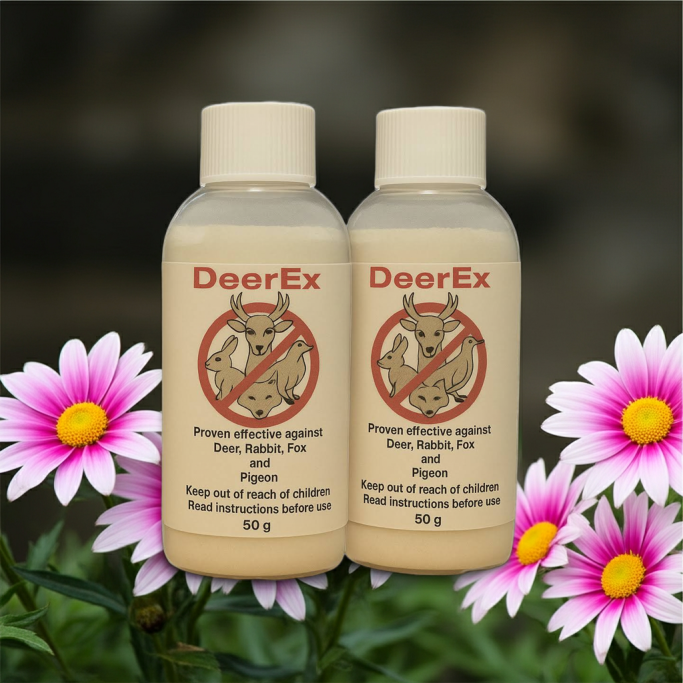
How DeerEx Concentrated Powder Works
DeerEx Concentrated Powder works by creating an invisible scent barrier that deer instinctively avoid. When the powder is mixed with water and applied to plants and garden entry points, it coats new growth, buds and leaf tips with a scent signal that deer associate with unfamiliar or unsafe feeding areas. This encourages deer to move away and browse elsewhere, without harming wildlife, pets, people or plants.
Why choose the powder format?
The concentrated powder is designed for gardeners who want a cost-effective solution for medium to large gardens. Once mixed with water, it produces a larger volume of ready-to-use spray, making it ideal for repeated applications across borders, shrubs, young trees and garden edges.
How DeerEx Ready-to-Use Spray Works
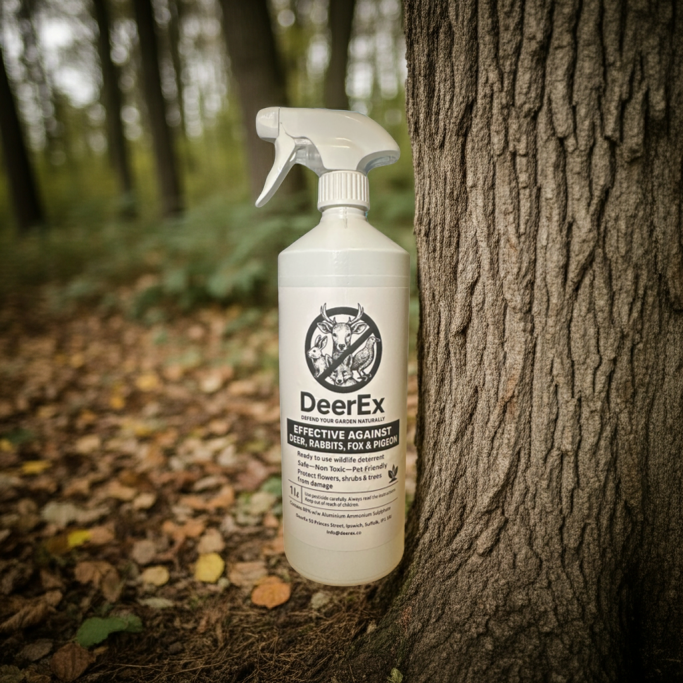
DeerEx Ready-to-Use Spray works by applying a ready-mixed, wildlife-friendly scent barrier directly to plants and access routes that deer instinctively avoid. The spray is applied straight from the bottle to vulnerable growth, buds and garden entry points, helping discourage deer from feeding without causing harm or distress.
Why choose the ready-to-use spray?
The ready-to-use spray is ideal for quick, convenient protection with no mixing required. It is well suited to smaller gardens, patios, borders and high-value plants where fast application is important.

Who did it?
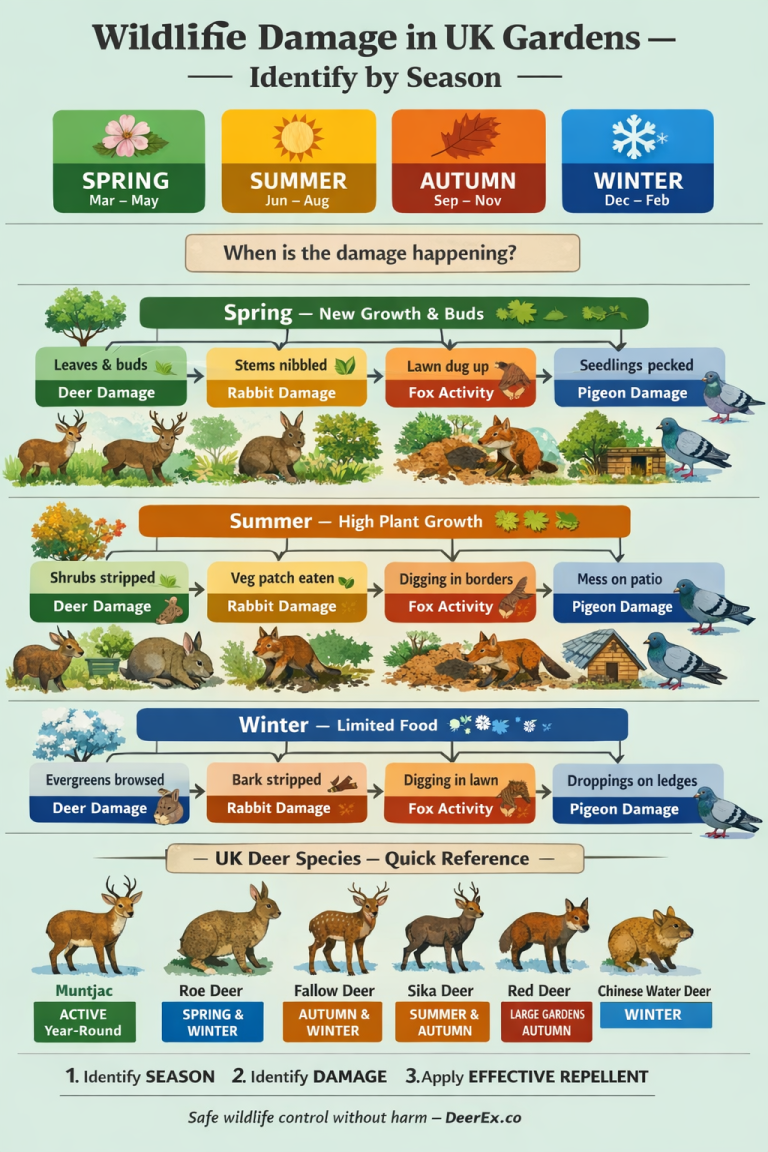
How to deal with wildlife damage
Deer Damage
Common signs
Leaves, buds and shoots stripped overnight
Damage up to 1–1.5 m high
Roses, shrubs, borders and young trees affected
Most active UK deer
Muntjac, Roe, Fallow, Sika, Red deer, Chinese water deer
Action plan
Apply deer repellent to new growth, buds and leaf tips
Treat entry routes, garden edges and access points
Reapply after heavy rain and during rapid growth periods
Recommended approach
Use a wildlife-friendly, scent-based deer repellent to discourage browsing without harm.
Rabbit Damage
Common signs
Clean, angled cuts on stems
Damage close to ground level
Veg patches and seedlings targeted
When it happens
Mostly overnight and early morning, especially spring and summer
Action plan
Protect young plants and seedlings early
Treat garden edges and low access points
Reapply regularly during active growth
Recommended approach
Use a rabbit deterrent designed for garden plants and vegetable beds.
Fox Damage
Common signs
Holes in lawns and borders
Repeated digging in the same areas
Disturbed soil or compost
Why it happens
Foxes forage for insects and mark territory
Action plan
Apply deterrent to dig sites and surrounding soil
Treat paths, fence lines and regular entry routes
Maintain protection to discourage repeat visits
Recommended approach
Use a fox deterrent that targets scent and territory behaviour.
Pigeon Damage
Common signs
Droppings on patios, balconies and furniture
Pecked seedlings and young plants
Repeated landing and roosting
Common locations
Urban gardens, patios, balconies and courtyards
Action plan
Treat landing and roosting areas
Protect seedlings and vulnerable plants
Reapply to discourage repeat visits
Recommended approach
Use a pigeon deterrent suitable for hard surfaces and garden areas.